Search This Blog

Showing posts with label globalization グローバル化. Show all posts

2013/11/06

Japan sumo's views on sumo internationalization 相撲の国際化における日本の相撲について


From ISF website.

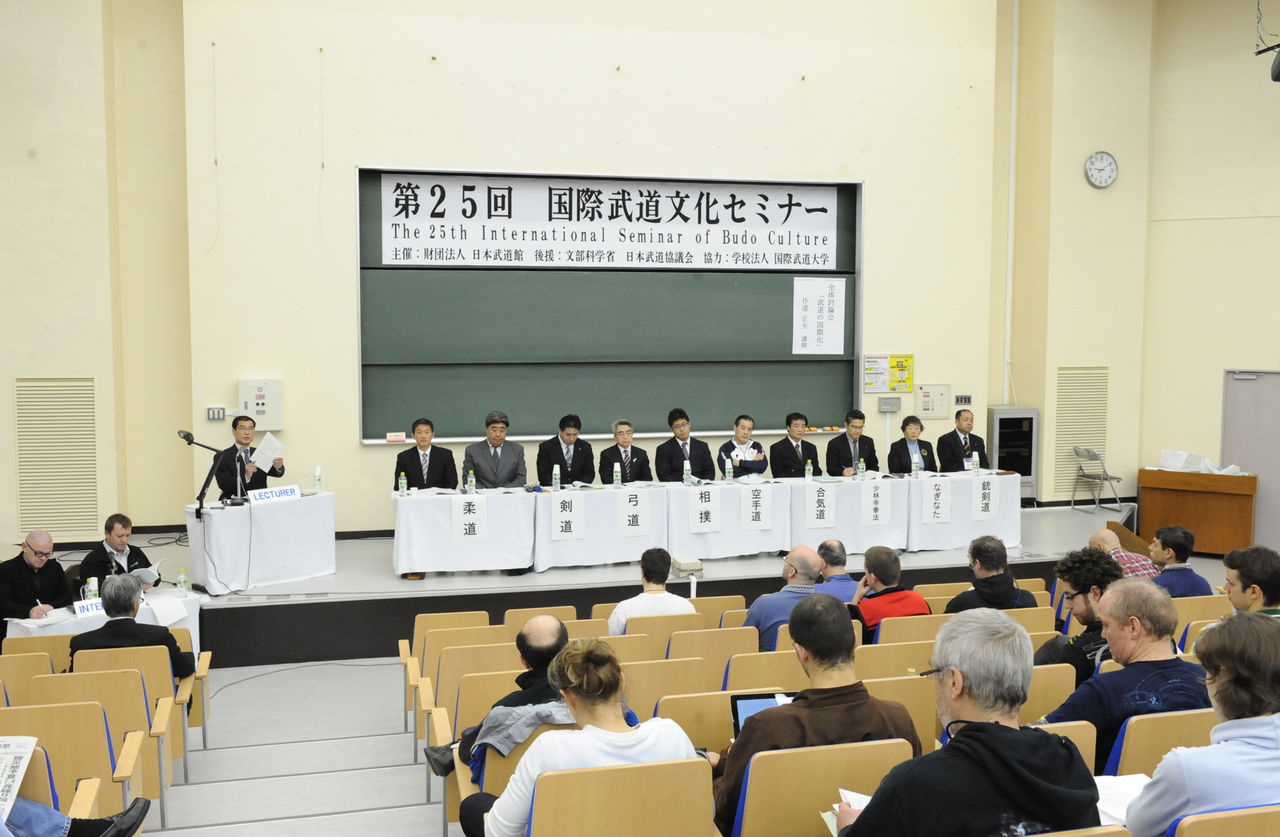
This is my fourth post on different Japanese Budo group's perspectives on the internationalization (globalization) efforts of their respective Budo arts. These come from the official 25th International Seminar of Budo Culture report, which was held in March.

This is not an exact or perfect summary, but it should be enlightening in regards to what Budo leaders in Japan are thinking. Any mistakes are my own.


Sumo
Speaker: Councilor - East Japan Student Sumo federation, Mr. Ryo Ito

Professional sumo now has numerous top athletes from Mongolia (Hakuho & Haruafuji), Europe (Kotooshu) and Africa.

The International Sumo Federation (ISF) began in 1992 with the inaugural men's world championships. The junior men's worlds was first held in 1999, the women's worlds first in  2001, and the junior women's worlds first in 2008.

Now there are 87 countries affiliated with ISF and it has received IOC recognition to be part of the non-Olympic sports in the World Games.

International events have light, middle, heavy and open weight categories, plus the competitors can weight spats under their mawashi.

The challenges for sumo are a lack of instructors overseas and a lack of proper sumo stable training spaces (dohyo).

Review
As this presentation is trying to seem egalitarian which is great, it would be interesting to know what connections the amateur international sumo movement has to the professional Japan domestic sumo industry. If major league baseball in the US is the top professional league which players from around the world are trying to get into, is there the same phenomenon with top ISF participating athletes trying to 'go pro' in Japan? If so, what are the challenges for the athletes and the Japanese dohyo that accepts them, and does the ISF have a role to play in the transition?

Of course the main question is do people overseas right now get interested in sumo simply when an instructor offers practices, or are there other reasons as well.

I attended the Vancouver Sumo Basho in June 7-8, 1998 when the top wrestlers came over for 2 days to put on a mini-tournament. It was quite well hosted, the athletes seemed to be in top form and the arena was completely sold out. If proper transparency and sport pedagogy practices finally emerge in the operations of sumo then the professional sport may have a wider appeal overseas, to which the ISF affiliated clubs could feed into.

2013/10/24

Japan Shorinji Kempo's views on its internationalization 少林寺拳法の国際化における日本の少林寺拳法について

Official picture of this year's seminar participants. From here.

This is my fourth post on different Japanese Budo group's perspectives on the internationalization (globalization) efforts of their respective Budo arts (see Karate, see Kyudo, see Judo). These come from the official 25th International Seminar of Budo Culture report, as the seminar was held in March.

This is not an exact or perfect summary, but it should be enlightening in regards to what Budo leaders in Japan are thinking. Any mistakes are my own.

Shorinji Kempo
Speakers: 
Tokyo Office Advisor, Mr. Kuida Kaname
Instructor - World Shorinji Kemp Organization (1996), Mr. Toyama Masakazu
  • The founder Doshin So started SK after WW2 based on his experiences learning Chinese martial arts on the mainland, while also seeing the hardships of the war and post-war period in both countries.
  • The founder stressed kenzen ichinyo (train the physical and spiritual side to be complete) and rikiai funi (physical/intellectual strength plus benevolence & kindness). 
  • The founder determined the problems he saw was caused by poor top-down societal leadership, therefore helping develop good leaders was important.
  • At first the founder did not have any plans to internationalize SK, but due to interest from initially Indonesian exchange students practicing Sk at Japanese university clubs, international growth opportunities emerged.
  • Indora, an Indonesian exchange student, started the first club in his country in 1966.
  • With this interest in SK from outside of Japan, the founder saw that SK's philosophy can help anyone become a good person. 
  • There is a now World Shorinji Kempo Organization (WSKO) with 36 country members.
  • International championships are held every 4 years.
  • WSKO appoints instructors for overseas teaching.
  • Difficulties for internationalization include;
    • nationalities with different customs
    • differences in religion
    • differences in law
    • accuracy of translation/interpretation
    • proper teaching of techniques
    • protecting & managing Shorinji Kemp name (differences in state laws)
(source pages 38-39, 77-78)

Review of comments
From Shorinji Kempo's initial starting period, internationalization is at its roots since it's based on Chinese martial arts at their own certain point of existence in the early 20th century.

The overseas challenges for Shorinjin Kempo are similar to other Budo groups so it would be interesting if these comments had included a few examples of how they have overcome some of these challenges in different countries. Hearing how some teaching methods that worked well in one place were be able to be adopted somewhere else (or didn't work well in when transplanted elsewhere) are things other Budo groups can learn from.

Unique in comparison to the other Budo speaker's comments are the SK problems with other religions and the challenges to maintain branding control of its name - I think other Budo groups have the name-brand problem too, but here SK speakers actually mention it. Hearing about what the WSKO has done to be on good terms with other belief systems and how they have also taken steps to protect their global identity would be quite interesting. Well, hopefully next year these questions can be asked.

To register for next year's Budo seminar, keep an eye on this Nippon Budokan webpage.http://www.nipponbudokan.or.jp/shinkoujigyou/gyouji_07.html 

2013/10/23

Japan judo's views on judo internationalization 柔道の国際化における日本の柔道について

Judo club training at the International Budo University

This is my third post on different Japanese Budo group's perspectives on the internationalization (globalization) efforts of their respective Budo arts (see Karate, see Kyudo). These come from the official 25th International Seminar of Budo Culture report, as the seminar was held in March.

This is not an exact or perfect summary, but it should be enlightening in regards to what Budo leaders in Japan are thinking. Any mistakes are my own.


JUDO
Speaker: All Japan Judo Federation Secretary General, Kiyoshi Murakami

Murakami Sensei spoke about Judo in a special presentation and during the general discussion session. (Highlights are from report pages 28-29, 69-70.)

Judo was created by Kano Jigoro in 1882.  The All-Japan Judo Federation was started in 1944.

There are now 200 countries in the International Judo Federation, which was created in 1952 (he later said 1951). Judo became an Summer Olympic sport in 1964 at the Tokyo Olympics.

Murakami Sensei spoke about the French Judo Federation, which was formed in 1946, as Judo was introduced to France in 1889. Now France has the largest number of members outside of Japan as there are 570,000 French judo-ka. Amazingly, 80% are under the age of 18.

A 'sport of high educational value' is emphasized by the French Federation as they even use cartoon characters to teach the moral values (respect, courtesy, etc) for the younger members.

Certifying instructors is overseen by the Ministry of Education.

The West's boycott of the 1980 Olympics in Moscow was one reason the International Budo University (IBU - Katsura, Chiba, Japan, the location of this seminar every year) was established by Dr. Matsumae Shigeyoshi in order to develop Budo instructors with an international, peaceful perspective.

The 1984 Los Angeles Olympics led to the 'winning at all costs' mentality, which persisted until the 2012 Olympics, but he felt the former IOC President Rogge tried to reduce this mentality by introducing the Youth Olympics in 2010 which focuses more on participants opportunities to interact with others than just competition.

For Judo it means focusing on mental discipline before winning. 'We are trying to project the educational side of judo by rethinking our roots and what the great things about judo are as a budo sport'.

He emphasized the words keiko suru (to practice) and shugyo suru (to undergo training) instead of the word play, which he felt were important concepts needing to be taught at an international level.

Review
Judo's globalization history is quite interesting and far too complex for the short length of time speakers at the seminar have to share about their respective arts. The French example gave a clear indication of the depth of acceptance of Judo in another country.

Some points about the internationalization of Judo that I would be curious to know are;
- What are the major changes to the competitive nature of Judo in terms of how points are scored, etc. I had heard a few years ago Japan was focusing on only the full ippon point scoring at the national team level, while other countries were emphasizing scoring small points to win a match. Is this true?

- Has Judo gained or lost its breadth of technical skills with the wider acceptance of Judo overseas?

- My impression of Judo is that the number of participants are decreasing - I see that in Japanese judo dojo and I see that overseas. Is this the case and if so what can Japan do to help reverse this trend? Since the last 20 years has seen an explosion of martial arts options come about, I wonder how Judo faired.

- I'm still hoping to see Budo leaders better describe terms and values. Sure, I can get what they mean, but I would like to know Murakami Sensei description of shugyo as compared to just training because normally someone's personal description can be quite enlightening.

For myself, Judo was my first experience with Budo over 35 years ago, and while I switched to Karate, I still very much appreciate Judo for its practical aspects. While Karate had a bit of a 'bad boy' image not too long ago before becoming a safe activity for kids, recently at some arenas in Japan I have heard that due to a few incidents during Judo tournaments of rowdy behavior (fighting, yelling outside when teams have lost) that some arenas will refuse to hold a Judo event. I'm sure it's only a few trouble-makers (I have seen Karate parents get out of hand at regional high school events after a kumite team has lost in the final) so obviously the win-at-all costs mentality can be found anywhere.

To register for next year's Budo seminar, keep an eye on this Nippon Budokan webpage.
http://www.nipponbudokan.or.jp/shinkoujigyou/gyouji_07.html

2013/10/21

Japan's perspective on kyudo internationalization 弓道の国際化における日本の弓道について


This is the second post of my review of the official report from the 25th International Seminar of Budo Culture held in March. Over the next few days I'll highlight some key points listed by each Japanese budo group in regards to their perspective on their internationalization efforts and challenges.

This is not an exact or perfect summary, but it should be enlightening in regards to what budo leaders in Japan are thinking. Any mistakes are my own.

Kyudo
Tokyo Kyudo Federation Vice-Chairman & All-Japan Examiner: Kubota Fumiro

The first international kyudo moment was when Dr. Eugen Herrigel (1884-1955) returned to Germany from Japan after having studied kyudo and he wrote the book Zen in the Art of Archery, which led to kyudo starting in Germany. By 1972 the European Kyudo Federation was formed, followed by a North American Federation by 1993.

In May 2006 the International Kyudo Federation (IKYF) was founded, headquarted in the All Nippon Kyudo Federation. There are 18 countries with 3, 500 members.
The first international championship was in 2010 in Tokyo and the next will be in 2014 in Paris.

Reasons non-Japanese have commented on practicing kyudo;
-learn about Japanese culture
-beautiful form of budo
-improve concentration
-relax mind and body

In Oct 2012 a special seminar for foreign representatives was held at the Tokyo Chuo Dojo, followed by an Asia-Oceania seminar in Aichi prefecture in April 2013.

Because kyudo fires a projectile, this places a limit on training locations so the first challenge for kyudo's internationalization is overcoming the temporary training spaces overseas. Second challenge is getting equipment to overseas members and getting it repaired when needed. Third challenge is the language differences. Fifth challenge is instructors teaching correctly.

There was a participant comment on some kyudo practitioners focusing more on the sports competition and less on self-evaluation when doing Kyudo. Kubota replied there are many competitions and that while hitting the target is important, emphasis is also placed on proper technique.

Review
Like all presenters at the seminar I'm sure, everyone is very sincere about promoting their Budo so while time is short and the participants are mainly quite experienced Budo-ka, these events really need to provide a chance at sharing valuable information others can find useful. For example, just giving one example how best to supply equipment to overseas branches or one example on how best-practices are determined, taught and assessed would be a good idea as these examples could be reviewed for adoption by other Budo groups.

For evaluating kyudo, 3 main points already exist;
Enhancing knowledge through seminars and tournaments.
Improving organizational efficiency through supporting overseas federations.
Increasing accountability through better instructors and more dan testing.

Now what really needs to happen is the sharing of what works well, and doesn't work well, so other budo groups can learn from it.

To attend the seminar next year, click here.

Japan karate's views on karate internationalization 空手の国際化における日本の空手について


I got a copy of the official report from the 25th International Seminar of Budo Culture, which was held in March. Over the next few posts I'll cover what different Japanese Budo leaders of the different Budo groups mentioned in regards to each group's internationalization efforts, and then add my reflection of those comments.

This is not an exact or perfect summary, but it should be enlightening in regards to what Budo leaders in Japan are thinking. Any mistakes are my own.

Karate
Speakers
Japan Karatedo Federation (JKF) Vice President, Mr. Kurihara Shigeo
Former JKF National Team Coach, Mr. Toshiaki Maeda

  • The World Karate Federation (WKF) bid for Olympic inclusion was the biggest international goal of the JKF (seminar was held prior to the summer rejection of karate by the IOC).
  • WKF President Antonio Espinos visited Japan in January to promote the Olympic bid and also to say it's important to emphasize other aspects of karate like etiquette and discipline.
  • The JKF wants to see better results of Japanese athletes at the WKF world championships.
  • Inside Japan, 'education & cultivation of physical & mental strength of our youth is a major pillar for the development of Karate-do' and 'after WWII there is evidence in the current state of society that education of the heart/soul and social morals are lacking'. Therefore '...the introduction of compulsory Budo education at junior high school will play a significant role in filling the gaps in present-day family, society and school education'. (pg 44-45)
  • participant question - problem with victory poses in competition - former national team coach Maeda Toshiaki answered that while most would rather not see it, different cultures have different norms, especially when the stakes are high in international competition.

(source pages 43,46, 84)

Reflection on the comments
While the WKF is leading the worldwide development of karate, as it should being the sport authority, there are some problems. The emphasis on Olympic inclusion (for kumite point-fighting only) is only for elite-competitors as it doesn't enhance the wider karate recreational community nor support traditional kata learning and performance. Sure, one could argue if Olympic acceptance had happened more state support to Karate would have occured, but one, there is no clear description of how and two, it didn't happen so other plans need to be promoted.

Also, the JKF worries about etiquette, discipline, lack of morals, etc are never clearly defined. What morals? What lack of discipline? What empirical evidence shows karate practice makes people better citizens? How have junior high school students in Japan improved behavior overall due to Budo training as demonstrated by what studies?

It could be argued the pre-WW2 morals of Japanese right-wing political society which directly infested Budo arts were far worse before 1945 than after. It was the Occupation authorities which forced Budo to restructure into less harmful organizations.

Don't get me wrong, I'm glad to see at least in Japan there are Budo lessons in all junior high schools. Karate is taught in my school and some of these students then come join the karate club I coach here. But when it comes to reasons, just because someone wants something to be true doesn't make it true. We need to be more factual with an impact assessment performed regularly especially if being taught in the schools, otherwise it similar appears as a nationalism exercise.

It would be nice to see the JKF take a more public stance on the how the new WKF kata rules are weakening traditional karate by allowing for any interpretation of a kata. Coming up with some effective advise for how to improve overseas kata performance in cooperation with the large style groups is needed to make an effort to revise this new WKF kata policy.

About the victory poses - like the fist pump or 'gut's pose' - I'm not so worried about it as I pay attention more to a competitor's overall attitude towards their opponents and to the officials. A bow is like a handshake so do they at least show this courtesy entering or leaving the mat, that they respect the efforts of everyone involved? I've seen athletes win with no expression, then refuse to bow or shake hands with their opponent afterward, which I think is rude.

Emotion should be allowed, but within reason. Running around the ring with one's flag would be silly after winning a big match, just as not accepting a sportsman-like gesture to shake hands with an opponent who offers it.

For Karate promotion internationally, I would rather see the WKF and other groups try to enhance what has been established now by building more opportunities for the current karate world to interact more with greater equality. Style groups should be supported so that they then can bring their support to the WKF. Except for kumite, the WKF should not go style-less for kata competition, but reinforce better standards, which is much more easy to do with all the technology at our fingertips. And the promotion of Karate should be about the personal health benefits and the inclusion into a vibrant community, without relying on negative unquantifiable reasons for why anyone should do karate.

Other posts will cover comments for judo, kendo, sumo, kyudo, Shorinji kempo, naginata and jukendo.

To register for next year's seminar, keep an eye on this Nippon Budokan webpage.
http://www.nipponbudokan.or.jp/shinkoujigyou/gyouji_07.html